CARING FOR YOUR HANDMADE WOOD FURNITURE (WITHOUT MAKING IT A FULL-TIME JOB)
Its not hard to take care of handmade furniture
CARING FOR YOUR HANDMADE WOOD FURNITURE (WITHOUT MAKING IT A FULL-TIME JOB)
Congratulations — you've got a piece of real, solid wood furniture in your house. Maybe it's from my shop, maybe it's from somebody else's, maybe it's a hand-me-down that's been around longer than you have. Either way, you're now a steward of a thing that can easily outlive you if you treat it reasonably.
The good news: "reasonably" is a low bar. Wood furniture doesn't need fussy rituals or special products. It needs a handful of common-sense habits and a little grace when life happens. Here's the whole deal.
THE SHORT, SHORT VERSION
If you only read one paragraph of this post: dust it occasionally, wipe up spills when they happen, keep it out of direct sun and off radiators if you can, and don't let it live in a super dry or super wet environment. That's 90% of the job. Everything below is just details.
DAY-TO-DAY: DUST AND WIPE
Dust with a soft dry cloth or microfiber. That's it. You don't need a spray, and in fact, most of the spray-on "polishes" sold at the grocery store contain silicones or waxes that build up over time and can make future refinishing harder. I'd rather you use nothing than use those.
For wiping up a spill, a damp cloth is fine. Damp, not soaking. Wipe it up, then dry it with a clean cloth right after. Wood handles water fine if you don't let it sit.
If you want to occasionally give the piece a more thorough clean, a cloth dampened with water and a tiny amount of dish soap — then wiped down again with plain water, then dried — will not hurt anything.
FINISH-SPECIFIC NOTES
How your piece is finished changes what it wants from you. If you're not sure which finish you have, check with whoever made it (if it came from me, I'll have noted it on your care sheet).
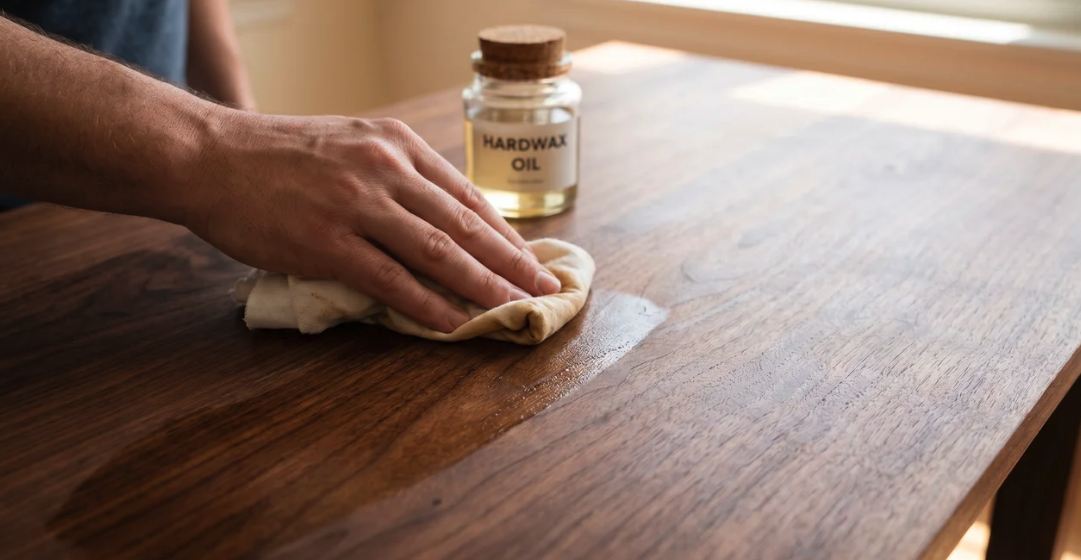
Oil finishes (like hardwax oil or pure tung oil). These are my favorite for a lot of pieces because they age beautifully and are easy to repair. They look and feel like wood, not like wood under a sheet of plastic. The trade-off is that they're less bulletproof than a polyurethane — water marks can happen if a wet glass sits overnight. The upside is that an oil finish is trivially easy to touch up. A light sanding and a fresh coat of oil on the affected area and you're back in business.
Hardwax oils (a popular middle-ground finish) behave similarly to oil — wipe with a damp cloth, and if things ever start looking dry or thirsty in a few years, a fresh coat of the same product will revive it dramatically.
Lacquer or polyurethane finishes. These are what's on most factory-made furniture and some custom pieces. They're more water-resistant but harder to repair if they do get damaged — small fixes are easy, bigger ones usually mean refinishing the whole top. Just wipe these down like any other surface, and you're fine.
Shellac or older traditional finishes. Usually found on antiques. Extra careful with water and alcohol — both can leave marks. When in doubt, check with a pro before you put anything harsh on an antique.
HUMIDITY IS THE QUIET THING THAT MATTERS
This is the part most people don't think about, and it's probably the single most important thing for the long-term health of a piece.
Wood moves with humidity. In dry winter air, it shrinks a little; in humid summer air, it expands a little. Well-built furniture is made to handle this, but extreme swings are hard on everything — joints, panels, finishes.
The sweet spot is roughly 35–55% relative humidity. If your house regularly drops below 30% in winter (which happens in a lot of places with forced-air heat), a whole-house humidifier or even just a small one in the room where the piece lives can make a big difference. You'll feel better, too, actually — your skin will thank you.
Things that are especially rough on wood furniture:
- Sitting directly over a heating vent
- Right next to a fireplace or wood stove
- In front of a big south-facing window that gets blasted with sun
- In a basement that's damp half the year
If your piece has to live somewhere less-than-ideal, that's fine, just know it might show a little more seasonal movement than a piece in a more stable spot. None of this will hurt the piece in a real sense, but small gaps might open and close with the seasons.
SUN FADES EVERYTHING
Different woods react differently to sunlight over time. Walnut lightens. Cherry darkens. Most woods will shift in some direction with years of direct sun. This is normal and usually beautiful, but if you have the piece in a really sunny room, be aware that anything you leave on the surface long-term (a vase, a stack of books) will create a lighter or darker ghost when you move it.
A practical tip: if you've got a piece in a sunny spot, rotate what sits on it every few weeks, especially in the first year or two. The finish "settles in," and the color will even out more evenly if you move things around.
STUFF THAT WILL HAPPEN, AND IS FINE
Real wood furniture gets used. Here's a partial list of things that will happen and are fine:
- A small dent. Live with it, or: put a damp cloth on it, press a warm iron on top for a few seconds, and the dent will often rise back up as the wood fibers swell.
- A water ring from a sweating glass. On an oil finish, a light buff with a little fresh oil will usually erase it. On a film finish, there are a few tricks (mayo, of all things, sometimes works) or a pro can fix it.
- A scratch. If it's shallow and on an oil finish, a little fresh oil usually makes it disappear or at least fade dramatically. Deeper scratches can be sanded and refinished locally without redoing the whole piece.
- A little creaking. Chairs and tables can develop a tiny bit of movement over years. If anything feels loose, tell me — it's almost always a 15-minute fix, not a disaster.
STUFF TO ACTUALLY AVOID
- Ammonia-based cleaners (most glass cleaners). These can dull finishes over time.
- Acetone and strong solvents. Nail polish remover in particular — keep this far away from any wood surface.
- Hot things directly on the surface. Use a trivet for hot pans and a coaster for hot mugs. Not because you're going to get in trouble, but because heat is one of the few things that can damage a finish fast.
- Covering the whole top with a tablecloth 100% of the time. I know this is counterintuitive, but a piece that never breathes and never sees light will age differently from the rest of the room, and when you eventually pull the cloth off, you'll have a color mismatch.
- DIY "restoring" with mystery products. If you're thinking about slathering something on a piece to "refresh" it, ask me first. Half the products sold for this purpose make things worse, not better.
WHEN TO CALL FOR HELP
If something happens that you're not sure about — a weird stain, a joint that's come loose, a finish that's looking dull all of a sudden — send me a photo. Most of the time, the answer is "that's normal, try this," and in the rare cases where it's a real issue, catching it early is way easier than catching it late.
THE SHORT VERSION
Wipe it, don't drench it. Keep it out of extreme sun and dryness. Use a trivet. Love it. That's it. A piece of well-made wood furniture is not a delicate thing — it's a durable thing that gets nicer with age. Let it do its thing.
And if you're ever unsure about something, just ask. I'd rather answer a small question now than fix a bigger problem later.